The Analogue and Digital Mastering Studio Divide
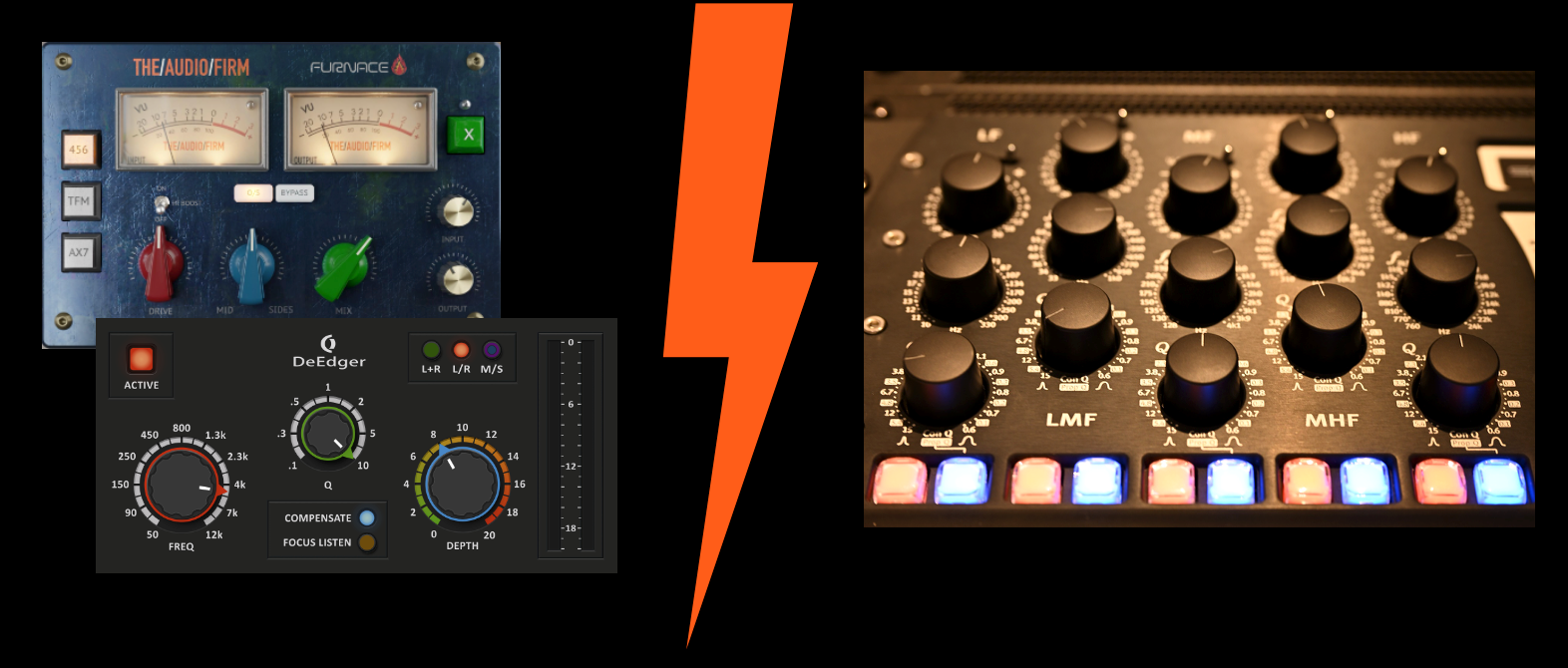
For decades, mastering engineers have debated the relative merits of analogue and digital equipment in their mastering studio. Analogue purists point to the musical saturation and harmonic richness of classic outboard gear. Digital advocates value the transparency, precision and recall that modern software provides. These days, some analogue equipment is also digitally recallable via a connected plugin in software, giving a strong claim that modern analogue is the best of both worlds for a mastering studio.
The Perspective of a Mastering Engineer
For me, the ideal mastering studio setup isn’t about choosing between digital and analogue. It’s about using each where it does the job best.
I like to deal with problems early and precisely in the digital domain, make the broader musical decisions through analogue hardware, and then return to digital for the final stages of limiting and quality control. This hybrid approach for a mastering studio gives me the control and consistency of digital processing, while still allowing the analogue chain to provide the broad tonal shaping and character that I want from a finished master.
I mention some specific products below. I am not affiliated to any of these products. They are personal choices. I’ve spent a lot of time (probably far too much) testing different plugins to find the ones that work for me in my mastering studio. If you ask a different mastering engineer, I am sure they will give you a different list.
Dealing with problems early
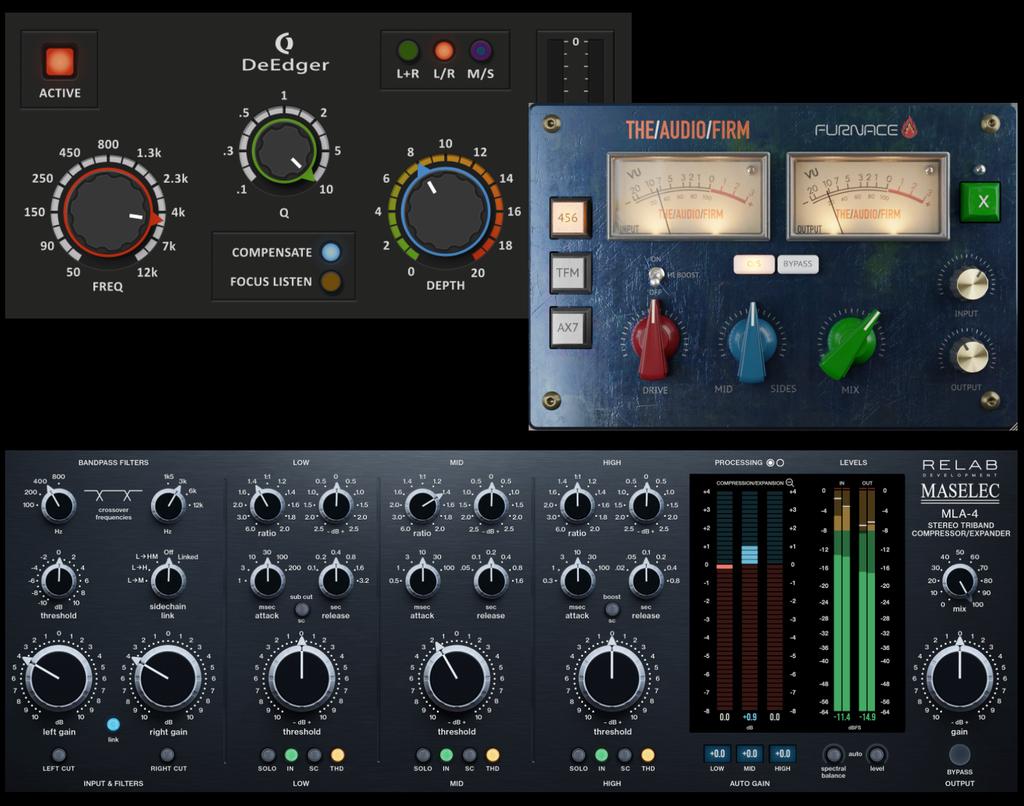
One of the most important parts of my mastering studio chain is a group of plugins from Ohlhorst Digital: DeEdger, Finesse, Limen and Ancora.
I mostly use these plugins early in the chain because they allow me to address some of the things that can otherwise make mastering difficult later on — hardness, harshness, unwanted resonance and problems with the stereo image.
The big advantage for me is that they are remarkably transparent. I’m not looking to hear a mastering processor working; I’m looking to hear the music improve. These tools allow me to make corrective moves without significantly changing the character of the mix.
Another feature I particularly like is that these processors don’t require me to set a conventional threshold. Instead, they mathematically adapt themselves to the level of the material. That makes a real difference in a mastering environment, where I might be dealing with very different levels and dynamics within a track.
Rather than spending time in the mastering studio chasing threshold settings, I can concentrate on what I’m actually hearing.
Hardness and harshness
Hardness and harshness can be particularly troublesome because they aren’t always obvious as simple EQ problems. A mix can have the right overall tonal balance but still feel aggressive, fatiguing or uncomfortable.
This is where I find DeEdger (a frequency targeting EQ) and Finesse (resonance suppressor) particularly useful. Used carefully, they can tame those problematic areas without simply putting a broad EQ cut across the frequency range.
That distinction is important. In mastering, I generally don’t want to remove an entire region of the spectrum just because something in it is occasionally troublesome. I want to deal with the problem while preserving everything that’s working. I’m not a big fan of dynamic EQ so these plugins work for me.
High frequency taming
Limen is another part of this early corrective stage, helping me deal with unwanted high frequency content (I sometimes also use it at the end of the chain if EQ moves have brought out frequencies that need looking at again), Again, transparency is the key. I use it to take the edge off high-frequency problems rather than to reshape the entire tonal character of a mix.
Stereo imaging
Ancora gives me a way of dealing with imaging issues before I reach the analogue section of the chain.
This is important because I prefer to establish a stable, controlled image before making the larger tonal and dynamic decisions later in the process. If there are problems with the stereo presentation, I’d rather address them early than expect the analogue chain to somehow fix them.
The result is a cleaner starting point for the more characterful stages of the mastering process.
Adding character with Furnace
Once I’ve dealt with those more surgical issues, I often turn to Furnace from The/Audio/Firm.
Of all the tape-emulation plugins I’ve used, Furnace is the one that sounds most convincing to me. It also offers transformer and tube colour options, but for my purposes I mainly use the tape section.
The reason is simple: I don’t have a tape machine or emulation in my hardware chain, so Furnace gives me access to that kind of analogue colour and feel.
I’m not necessarily using it to make something obviously “tape sounding”. More often, I’m looking for the subtle changes in density, tone and harmonic character that can help a digital source feel more finished. It can also pull a mix together and impart some gentle glue compression.
This is a very different role from the corrective plugins earlier in the chain. The Ohlhorst processors are there to solve problems. Furnace is there to add something.
Initial levelling with MLA-4
For compression and expansion, one of my main mastering studio tools is the MLA-4 Multiband Compressor/Expander from Relab Development.
I find it particularly useful for initial levelling. Multiband processing can sometimes get a bad reputation in mastering because it can be easy to overuse, but used carefully it gives me a useful way of controlling different parts of the spectrum without asking a full-band compressor to do everything.
The MLA-4 can also be used for expansion, which gives me another useful option when I’m trying to restore or control dynamics in particular areas.
I also have the ‘xmax’ from Elysia, a piece of hardware, which I can use either alongside the MLA-4 or as an alternative, depending on what the track needs.
The important thing is that I’m not committed to one compressor for every job. Different mixes respond differently, and having both options means I can choose the processor that gets me closest to the result I want to hear rather than forcing every track through the same solution.
The Analogue Processing Chain
Once the digital processing has dealt with the things I want to correct and control, I usually send the signal out to my analogue chain.
The analogue equipment is particularly useful for broad EQ moves, compression, and saturation — decisions that are more about the overall musical balance and feel than fixing individual problems.
I find that this division of labour works really well. Digital processing gives me the precision to deal with specific issues, while the analogue chain allows me to make broader, more instinctive moves and introduce the character of the hardware. Ok, it’s not that clear cut, as I sometimes find myself going quite surgical with the SPL PQ (hardware) but mostly it’s about broad strokes.
I’m not trying to make analogue and digital compete with each other. I’m using them for different purposes.
Digital Limiting and Final Checks
After the analogue chain, I come back into the digital domain for limiting and final checks.
At this point, most of the hard work has already been done. The signal has been cleaned up, controlled and shaped, and the analogue chain has provided the broader tonal and dynamic treatment.
The final digital stage is therefore about getting the master to its finished level, checking that nothing has been compromised on the way through the chain, and making sure the final result translates properly.
Why a Hybrid Mastering Studio Works for Me
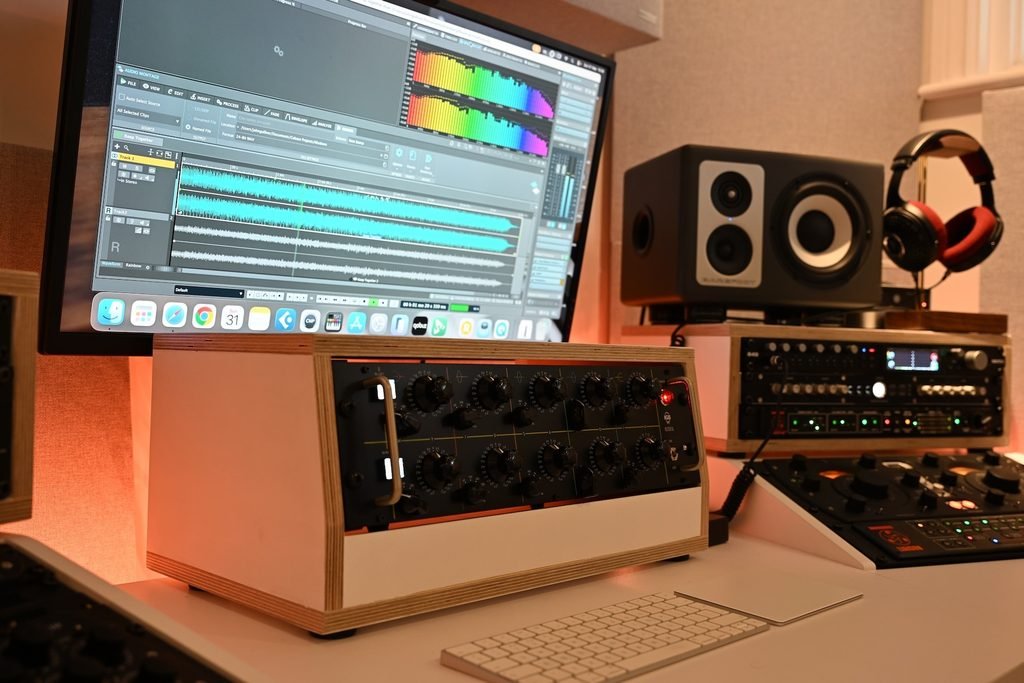
The main reason I prefer a hybrid mastering studio setup is that it gives me the best of both worlds.
Digital is exceptionally good at precision. I can identify and deal with hardness, harshness, resonance and imaging problems without necessarily affecting everything around them.
Analogue is exceptionally good at broad strokes and character. Once the technical problems have been dealt with, I can use the hardware to make larger tonal and dynamic decisions and add the qualities and colour that I want from an analogue path.
For me, that’s what a hybrid mastering studio setup is really about. It’s not about having as much equipment as possible or using analogue simply because it’s analogue. It’s about choosing the right tool for each stage of the process.
I want the early digital processing to be precise and unobtrusive, the analogue chain to provide the broad musical shaping and character, and the final digital stage to give me the control needed to deliver a finished master.
That combination gives me a workflow that is both technically controlled and musically flexible — and, most importantly, keeps the focus where it should be: on making the music sound as good as it possibly can.
Every project that arrives in the mastering studio is different, and the processing chain changes accordingly. What remains constant is the goal: to take a final mix and prepare it for commercial distribution, so that it sounds its best on every system and in every format. That is the job of a mastering studio, and it is why the hybrid approach remains my preferred way of working. If you are curious about what it can do for your own music, a free test master is the most direct way to find out.
Frequently Asked Questions
What is the difference between mixing and mastering?
Mixing is the process of balancing the individual tracks in a song, adjusting levels, panning and effects so that they work together as one piece of music. Mastering is the final stage of audio production that usually takes place in a specialist mastering studio. It takes the finished stereo mix and prepares it for commercial distribution, ensuring consistency, clarity and appropriate loudness.
Is and analogue better than digital for a mastering studio?
Neither is universally better. Analogue equipment can add musical colour, harmonic richness and a sense of glue that many engineers and artists love. Digital processing offers transparency, precision and accurate recall. A hybrid mastering studio combines both, so the engineer can choose the right tool for each project rather than being limited to one approach.
Should I avoid a mastering studio that doesn’t have a hybrid setup?
No. Each mastering engineer will decide what is their preferred way of working. Some engineers prefer a purely digital mastering studio, some prefer a purely analogue studio, and others will use a hybrid of both. There’s no right or wrong.