Online music mastering has become one of the most accessible ways for artists to prepare their songs for release. A decade ago, mastering was usually reserved for artists with label budgets or strong industry connections. Today, you can upload a mix from your home studio and receive a mastered track within minutes via a free or paid-for AI mastering service, or in as little as 24 hours from a professional mastering engineer working remotely.
The phrase ‘online music mastering’ covers a wide range of options, and the results can differ dramatically between them. Understanding how these services work, and what they can and cannot do, will help you choose the right route for your next release.
What Is Online Music Mastering?
Mastering is the final creative and technical stage of music production. It involves taking a finished mix and preparing it for distribution so that it sounds polished, balanced and consistent across different playback systems. Online music mastering simply means carrying out that process through a web-based service, rather than in a physical studio with an engineer beside you.
The basic workflow is similar across nearly all online mastering platforms. You upload your mixed audio file, the service processes it, and you download the mastered result. From there, approaches divide into two broad categories: automated AI mastering and professional human mastering.
How Automated AI Mastering Works
Automated mastering services use AI and signal processing algorithms to analyse your track and apply equalisation, compression and limiting automatically. Many platforms deliver release-ready masters in minutes.
Different services take slightly different approaches. Some use genre-aware processing, meaning the software adjusts its settings based on the style you select. Others offer a set of presets. BandLab, for example, provides four presets covering Rock, Pop, Electronic and Alternative, alongside options such as Universal for natural tonal balancing, Fire for punchy lows and midrange clarity, and Clarity for pristine highs. You choose the preset that sounds best and download the result.
Some free services promise genre-aware EQ, dynamics, and streaming loudness with a 24-bit WAV download and no signup.
Automated services also differ in file support (WAV, FLAC, MP3, AIFF) and pricing. With so many free tiers and trials, you can test the sound before paying.
Orange Polygon’s perspective: always export mixes to high resolution files that are at least CD quality (i.e., 16-bit, 44.1 Hz). Avoid compressed file formats like MP3.
What to Expect from Professional Online Mastering
The other option is where a professional human engineer masters your track remotely. This is the model used by many established studios, including Abbey Road.
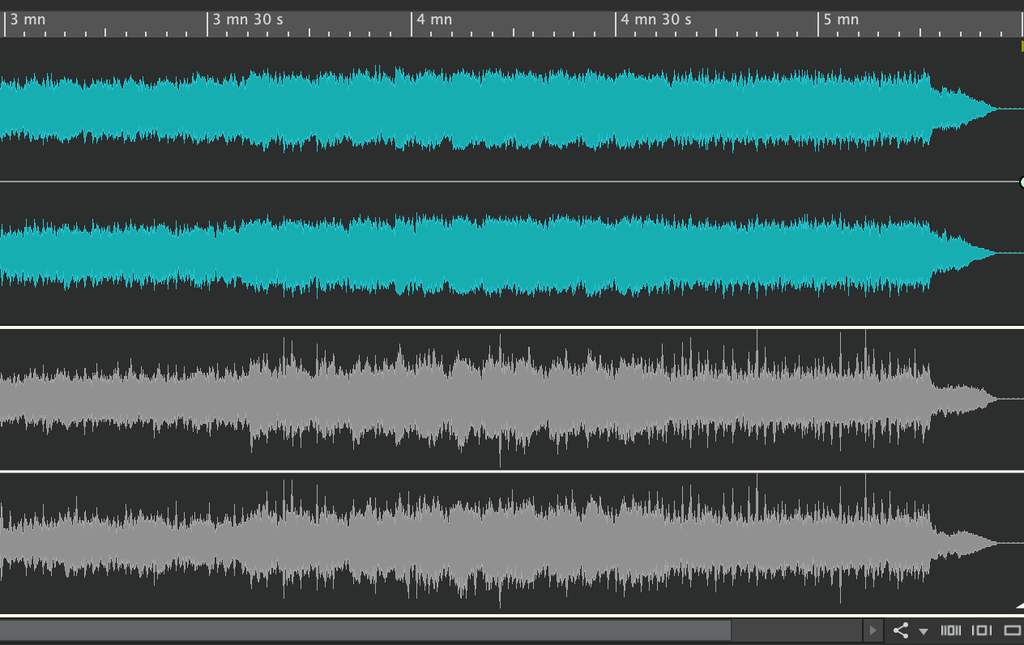
Professional online mastering follows a similar upload and download workflow to automated services, but the processing is very different. A human engineer listens to your track in context, considers the genre, the intended release format and the rest of your project (i.e., album), and makes creative decisions that a preset cannot replicate. If the mix needs more than standard EQ and limiting, an experienced ear will notice and respond.
Many studios combine analogue and digital processing. A hybrid approach combines the warmth and character of analogue hardware with the precision of digital processing.
Experienced mastering engineers know exactly how to prepare masters for specific genres. For example, the specific low-end needs for bass music mastering, techno, and other electronic genres. An experienced engineer will also know how to implement the vision of an artist in terms of reference tracks or specific dynamics to be retained.
Cost Comparison
With so many music mastering options available, it helps to think about what each pricing model offers.
Free AI mastering services let you hear what automated processing does to your mix without financial commitment. BandLab offers free song mastering with four presets, for example. These services are fast and convenient, and they suit demos, drafts and quick reference checks.
A subscription services suit artists who master frequently. Mixea charges $99 per year and MajorDecibel charges $45 per year, both with unlimited tracks. If you release several singles or albums each year, a subscription can work out cheaper than paying per track. The trade-off is that you are relying on automated processing, and the service never develops a relationship with your music.
Per-track or whole-album services from professional mastering engineers range from affordable professional studios to premium names. Abbey Road charges start from £100 per track, while a boutique UK studio such as Orange Polygon offers professional mastering from £40 per track, with revisions included and a free test master available.
| Service type | Price model | What you get |
| Free AI mastering | Free | Presets, instant results, browser-based processing |
| Subscription AI mastering | £40 to £80 per year | Unlimited tracks, multiple download formats |
| Professional, per-track mastering | From £40 to £150+ per track | Human engineer, revisions, personalised attention and communication |
The right option depends on your budget and the standard you want your music to reach.
Preparing Your Track for Online Mastering
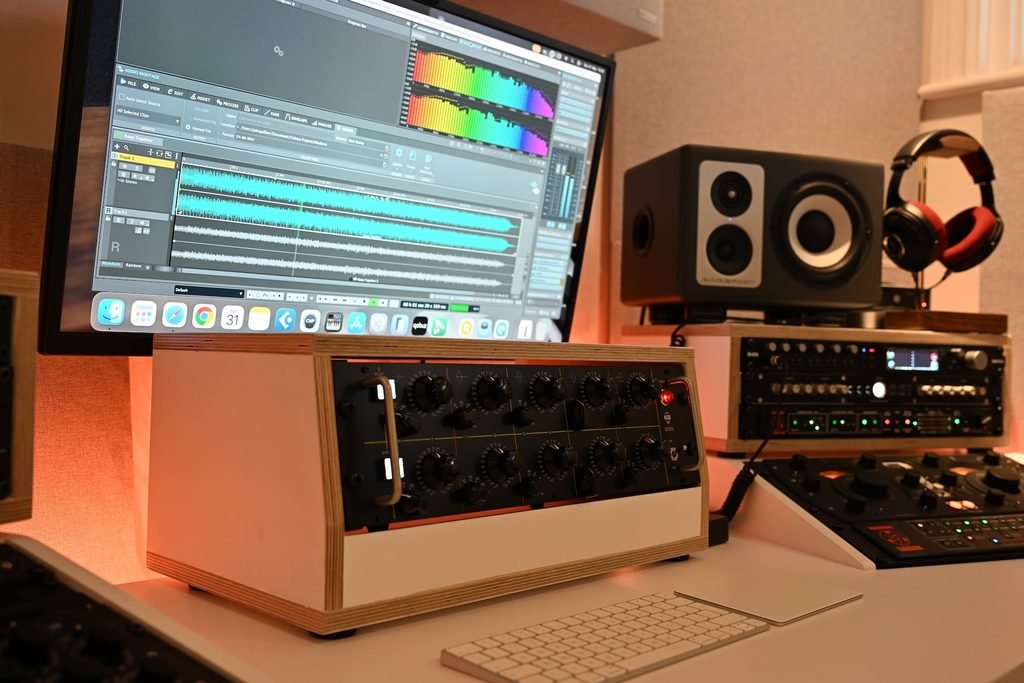
Whichever route you choose, the quality of your final master depends heavily on the mix you upload. Online mastering cannot fix a bad mix; it can only enhance a good one. Before sending your track, make sure it is properly mixed, with no clipping and enough headroom for the mastering stage. If you’re unsure whether your track is ready for mastering then some service will offer a free evaluation before your commit the track to mastering.
File format matters too. Most AI services accept common audio formats including WAV, FLAC, MP3, M4A and AIFF, but a high-resolution WAV file gives the mastering process more information to work with. A professional engineer will typically ask for the highest quality file you have.
Loudness is another consideration. Streaming platforms use their own loudness normalisation, and a good mastering service will prepare your track for that context. Automated services increasingly include streaming loudness and true-peak safety as standard, so the output is optimised for digital distribution.
Finally, allow time for revisions. Professional services usually include at least one round of revisions, and some automated platforms let you tweak the result by describing changes in words. If you are not happy with the first master, a good service will work with you until you are.
Speed and Convenience
One of the main appeals of online music mastering is speed. Automated services advertise instant or near-instant processing. You upload a file, wait a few minutes, and download your master.
Professional online mastering is slower, but the remote workflow removes the need to travel to a studio. You can work with an engineer anywhere in the world, which is particularly valuable for artists outside major music cities. In both its automated and professional forms, online mastering has removed the practical barriers that once kept many musicians from having their music properly mastered.
Frequently Asked Questions
Is there an AI that can master a song?
Yes. Several online mastering services use AI to master songs automatically, including well-known platforms such as LANDR, BandLab, Waves and SoundBoost. These services analyse your track and apply EQ, compression and limiting based on the genre and style you choose. The results are instant and often free, although they are generated by algorithms rather than a human engineer.
Can I master my music myself?
You can, but mastering requires a trained ear, a suitable listening environment and experience with the tools involved. Many artists master their own music to save money, but the risk is that your ears are already tired and biased from mixing the track. Online mastering services will give you a professional result without the cost of a physical studio visit.
What is the best app for mastering music?
There is no single best app, as it depends on your budget and expectations. For instant free results, BandLab and Soundplate offer browser-based AI mastering. For unlimited automated mastering, subscription services such as Mixea and MajorDecibel are popular choices. For the highest quality, a professional online mastering service with a human engineer will usually deliver the best outcome.
What is the best online mastering service?
The best online mastering service depends on what you need. If you want the fastest possible result at no cost, a free AI service is the obvious choice. If you release music often and want unlimited processing, a subscription platform makes sense. If you want to ensure the best sound a professional mastering engineer will nearly always be the best option.